


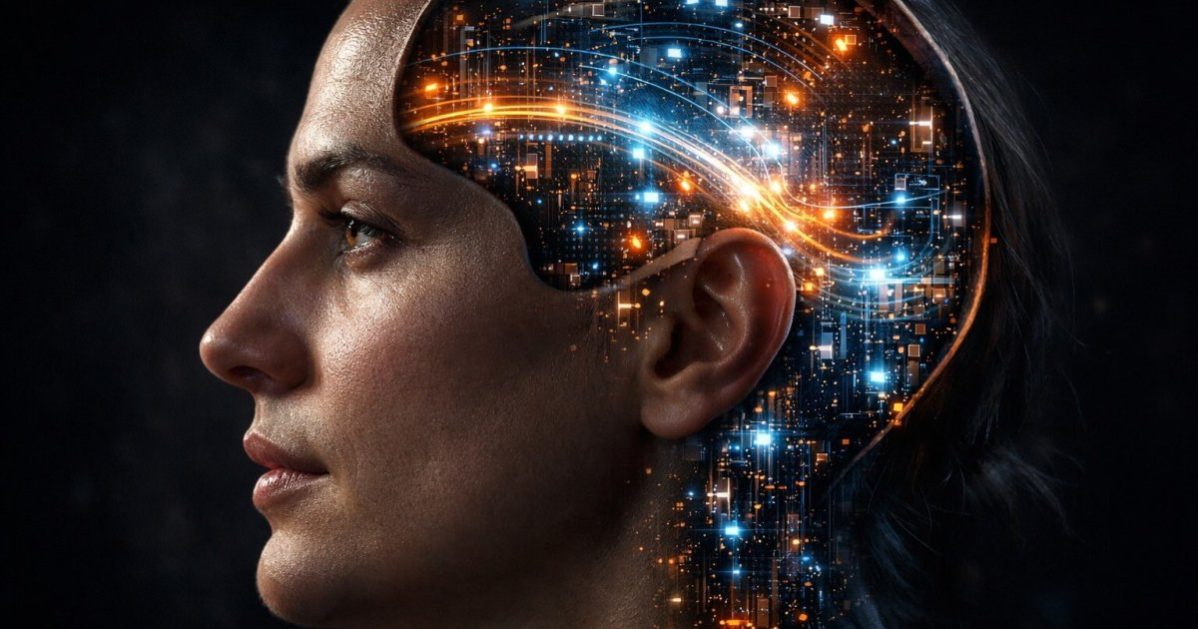
Can artificial intelligence develop human-like consciousness? Uncertainty lingers in the debate, questioning whether the current focus on the mind as a computer is adequate. A recent study posits a revolutionary theory: the brain does not operate like a digital machine, but computes uniquely through its physical structure. This notion redefines our understanding of consciousness in both humans and machines.
The Mind as Biological Computing
According to the theory of biological computationalism, the brain does not run abstract programmes, but performs computations through its own physical matter. This approach suggests that consciousness may rely on a different form of computation than that present in today's digital systems, challenging the basis of the current debate on artificial intelligence and consciousness.
The Algorithms and Biology Debate
The conflict between computational functionalism and biological naturalism has marked discussions about consciousness. While some argue that consciousness is purely organised information, others maintain that it depends on physical processes inherent to living beings. This dichotomy has left gaps in the understanding of the conscious phenomenon, causing research to stagnate.
The Brain as a Multi-scale, Energy Efficient System
The study highlights the importance of integration between different scales in the brain, where microscopic and macroscopic processes interact in complex ways. This interconnectedness, driven by the brain's energy constraint, enables remarkable efficiency in coordinating large-scale information. It is proposed that this energetic efficiency may be fundamental to the generation of conscious experience.
Applications in Artificial Intelligence
What implications does this theory have for artificial intelligence? While it does not rule out the possibility of artificial consciousness, it suggests that future systems will need to be based on hybrid, multi-scale, energy-efficient computing principles. This may require the development of new types of physical systems, moving away from the mere simulation of brain processes towards their actual embodiment in technological devices.
Final Reflection
Ultimately, the question of what kind of matter can generate consciousness in machines remains open. As we advance our understanding of brain functioning and the development of artificial intelligence, we face increasingly complex challenges and questions that invite us to rethink our paradigms about mind and technology.
Source: muyinteresante.okdiario.com
 Español
  English (UK)