


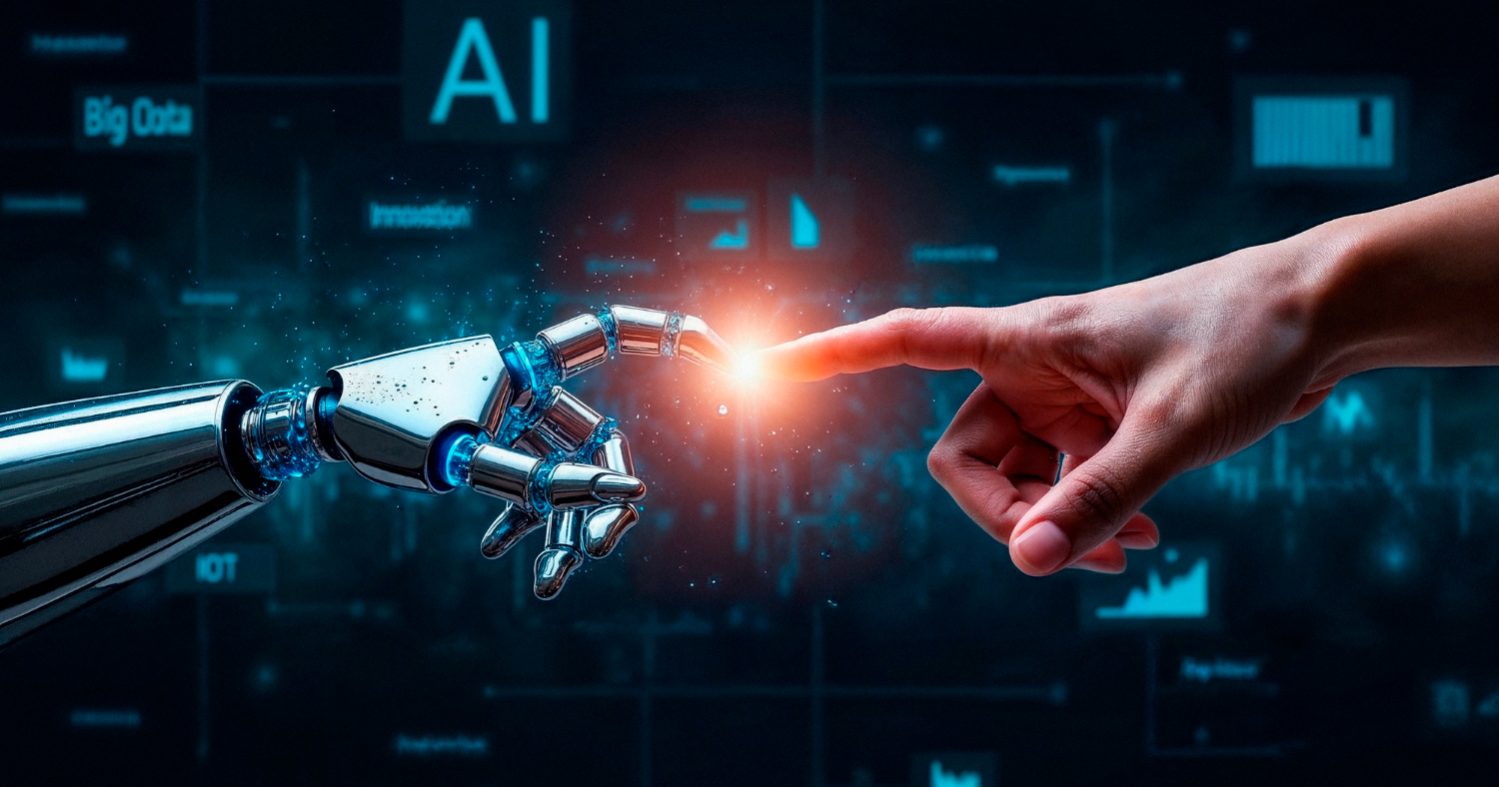
In a business context marked by the constant evolution of technology, artificial intelligence is at a crucial point. José María Alonso, Snowflake's experienced country manager for Spain and Portugal, outlines the trends that will define the direction of AI in 2026. The integration of AI at the heart of business is no longer an option, but an imperative.
Interoperability between AI agents is emerging as the catalyst for a new wave of productivity. Once constrained by closed environments, these agents can now collaborate thanks to open standards. The creation of an «agent economy» promises to unlock unprecedented efficiencies and transform the business landscape.
Self-verification: Autonomy as an asset
Self-verification emerges as a fundamental change in the scalability of AI agents. By 2026, the ability to validate their own work will allow these agents to correct errors without constant supervision, making them reliable and scalable tools for businesses.
Feedback loops: The path to continuous improvement
Feedback loops are establishing themselves as the evolutionary engine of AI. The ability to learn from actual usage will make the difference between static solutions and constantly evolving systems, boosting the accuracy and usability of applications.
Persistent memory: The key to personalisation
AI assistants move from being transactional to persistent collaborators thanks to their memory. Remembering contexts and preferences will enable more personalised and efficient interaction, transforming the way AI supports teams and projects.
Data: The new currency
In an environment where algorithms become standardised, data quality and governance become the competitive advantage. Effective integration between data and AI will be key to capitalise on technological improvements in a sustainable way.
Democratisation and data architecture
The democratisation of AI accelerates with open source models, allowing more players to develop customised solutions. In parallel, the metadata layer becomes critical, separating storage, compute and governance to create more flexible and agile ecosystems.
Role transformation and leadership
The evolution of roles such as the analytics engineer and CIO marks a transformation in technology governance. The focus on business innovation and AI-based strategy redefines the employment landscape, empowering high-value decision making and operational efficiency.
In 2026, artificial intelligence will be evaluated not by its theoretical capabilities, but by its actual integration into organisations. Networking, effective data management and talent will be the real differentiator for those who adopt AI as an essential part of their business strategy.
Source: www.zonamovilidad.es
 Español
  English (UK)