


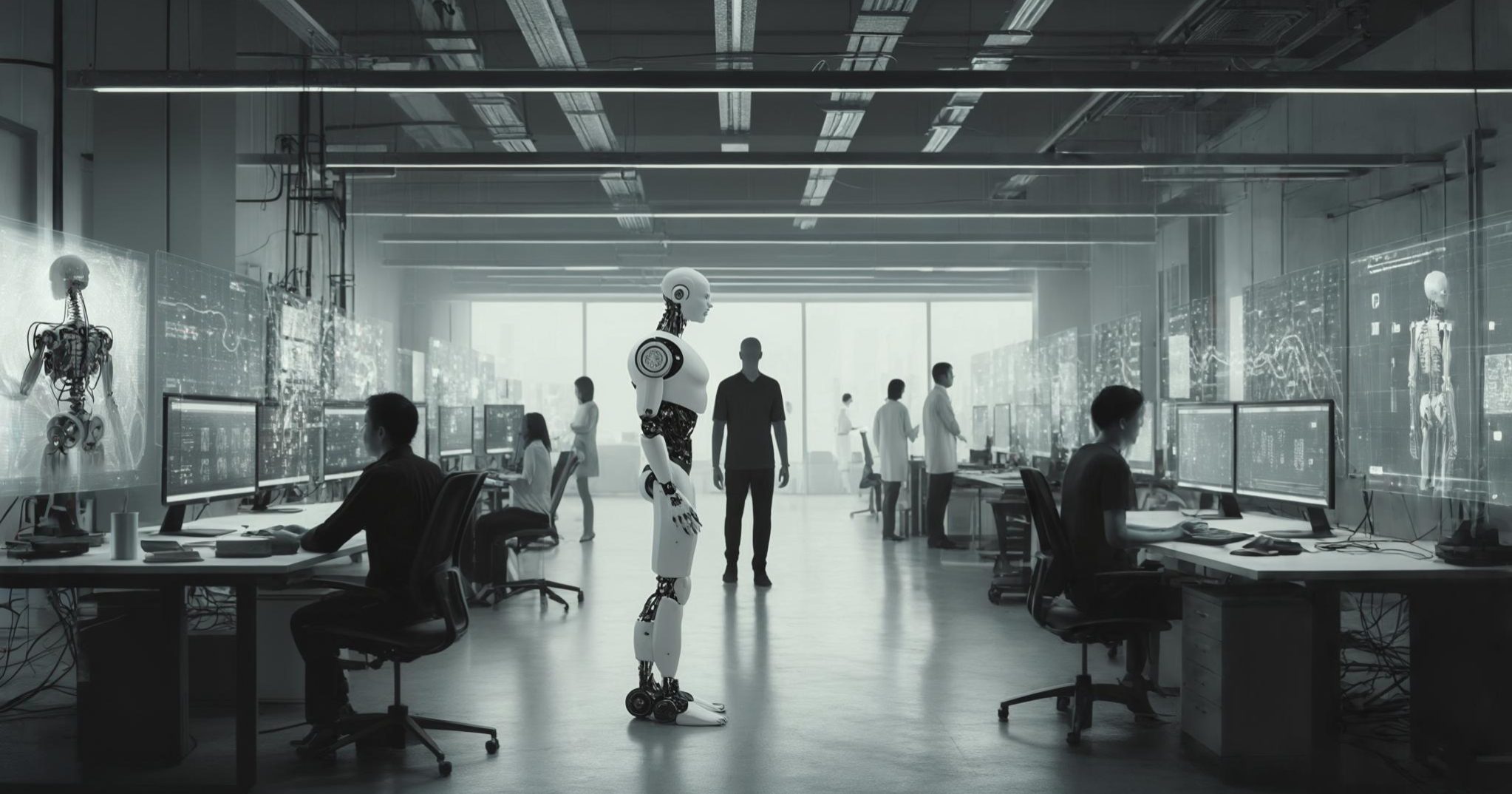
Today, Artificial Intelligence has become a fundamental tool in the workplace, with more than 60% of workers using this technology without effective control by companies. This lack of control exposes organisations to risks related to the security of data handled in unsupervised environments.
In a recent study conducted by VML The Cocktail in collaboration with Salesforce, it was revealed that AI has reached 76% of the population in just two years. More than half of workers rely on the technology for a variety of tasks, such as generating ideas, analysing data or summarising documents. Surprisingly, 61% of them do so without a corporate framework to support its use.
Risks and opportunities in the unregulated use of AI
This scenario poses both risks and opportunities for businesses. On the one hand, the uncontrolled use of AI can lead to security vulnerabilities by using corporate data in unauthorised systems. On the other hand, those organisations that manage to regulate this organic adoption will be able to transform it into measurable productivity, talent retention and leadership in digital governance.
Generative AI and its impact on human interaction
Another highlight is the growth in the adoption of generative AI, especially in conversational forms such as GPT chats. More than 60% of users interact in advanced ways with these tools, suggesting a transition to a model where people not only use artificial intelligence, but learn to collaborate with it.
The customisation of AI tools by 37% of users reflects an evolution in the way this technology works, with direct implications for individual productivity and organisational knowledge at the enterprise level.
The future of AI in business
It is crucial that companies act swiftly to implement policies and frameworks in the next 18-24 months to avoid the consolidation of uncontrolled usage patterns. Organisations that manage to adapt to this new reality will benefit from increased efficiency, talent retention and strategic positioning in the market.
In short, Artificial Intelligence is no longer a promise but an everyday reality in companies. Those that manage to integrate it in an effective and controlled way will be in a privileged position to lead the digital transformation and make the most of the advantages that this technology offers in the workplace.
Source: www.eleconomista.es
 Español
  English (UK)