


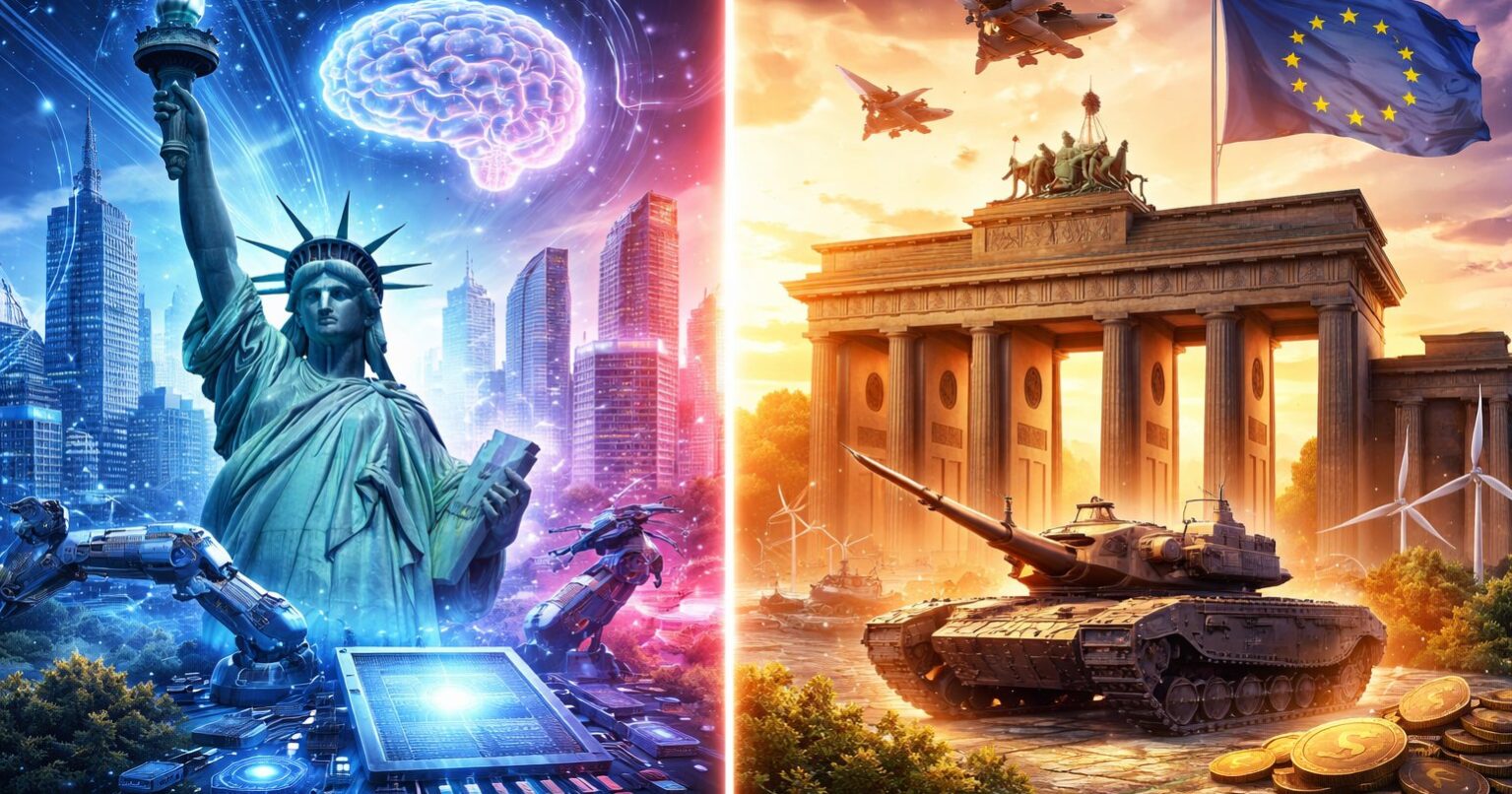
In a world marked by economic uncertainty and geopolitical tensions, the US economy stands out for its dynamism driven by artificial intelligence and technological innovation. Meanwhile, Europe looks to Berlin for a new impetus to its growth. What strategic differences are shaping the direction of these powers? How does the technological revolution impact digital marketing and business strategy?
Recent economic history reveals that crises are inevitable, but the key is resilience. The US leads the way in this regard, harnessing artificial intelligence to sustain growth, while Europe relies on Germany's fiscal strength. The digital era promised stability, but reality proved otherwise, generating a succession of crises that defied expectations.
The US economy has been able to take advantage of artificial intelligence and technological innovation to maintain its dynamism, despite the challenges. In contrast, Europe faces a more complex scenario, with moderate growth and increasing dependence on external factors. Accelerating digital transformation and smart marketing are key in this context of constant change.
The Technological Revolution and the Future of Digital Marketing
Artificial intelligence has revolutionised the way companies approach digital marketing, enabling content personalisation, process automation and strategy optimisation. Generative AI applied to content has opened up new creative possibilities, while SEO has become more sophisticated thanks to AI tools.
Marketing agencies have incorporated automation with AI to improve efficiency in campaign management and audience targeting. However, it is not all advantages, as AI also poses risks in terms of privacy, security and inequality. It is crucial to strike a balance between technological innovation and business ethics.
The Future of Artificial Intelligence in Businesses
The future of artificial intelligence in business is promising, with transformative potential across all sectors. The ability to predict trends, analyse massive data and personalise the customer experience are just some of the advantages AI offers in business. However, it is critical to proactively address the ethical and legal challenges that arise with its implementation.
In conclusion, the US is leading the race towards artificial intelligence in digital marketing, as Europe seeks its path to digital transformation. The collaboration between technology and strategy will continue to be key to the future of marketing, driving innovation and competitiveness in an increasingly digitised business environment.
Source: www.mundiario.com
 Español
  English (UK)