


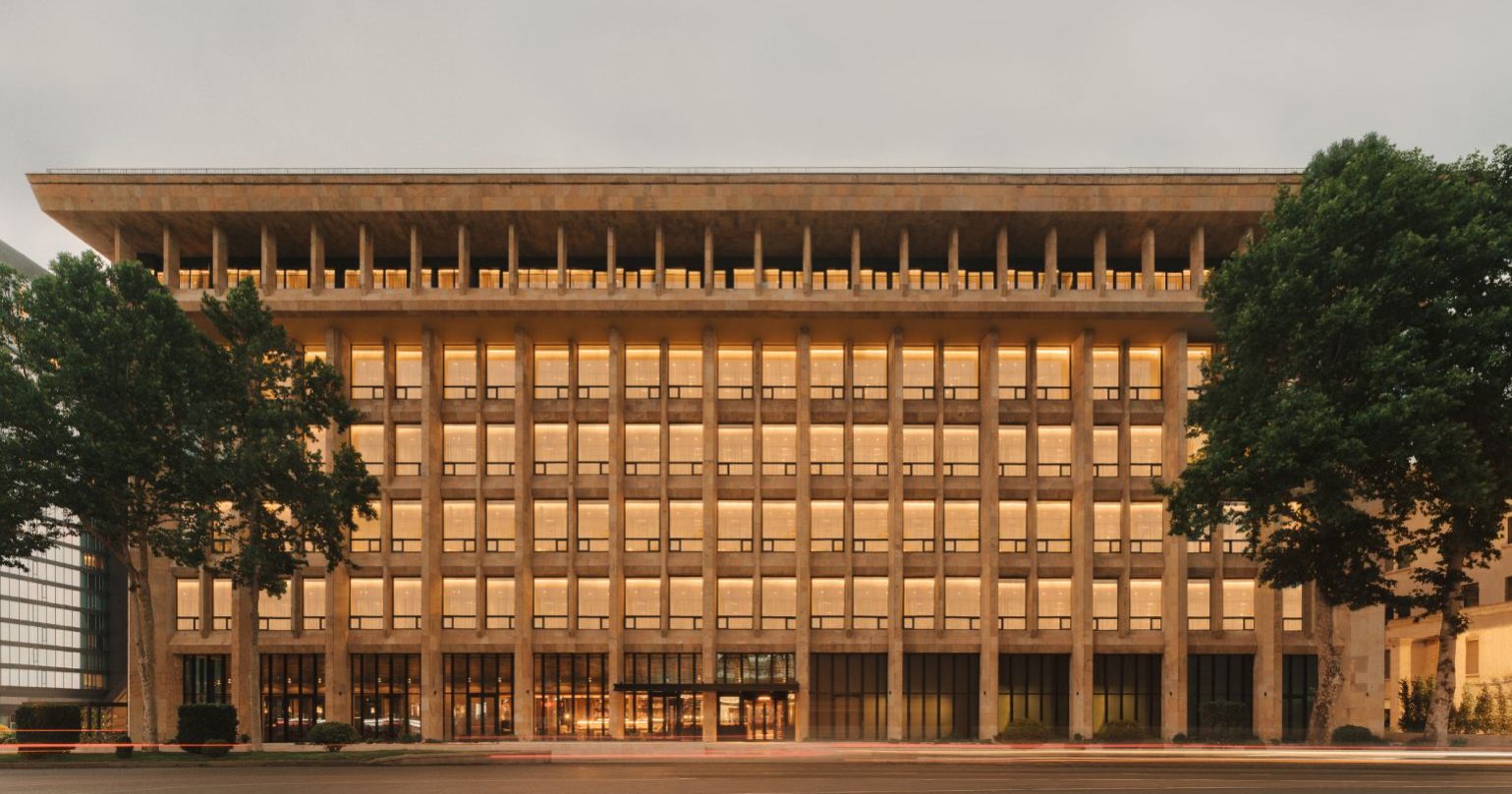
A 1970s brutalist icon transformed into Tbilisi's premier new hotel
A landmark brutalist building on Tbilisi's Rustaveli Avenue has been revitalized into the first Leading Hotels of the World property in the Caucasus region. The former Soviet-era post office, now known as The Telegraph Hotel, has undergone a remarkable transformation led by architectural design practice Neri&Hu, creating a harmonious blend of modern luxury and historic significance.
Discovering The Telegraph Hotel
The Bolsini tuff façade of The Telegraph Hotel, an architectural gem from the 1970s, commands attention on Rustaveli Avenue. Surrounded by a vibrant mix of cultural landmarks, the hotel stands as a testament to Tbilisi's rich history and diverse influences.
The Design Concept
Neri&Hu drew inspiration from Tbilisi's caravanserai to reimagine the hotel as a modern-day urban oasis. The interior design features a network of corridors reminiscent of Tbilisi's alleyways, while the central courtyard and multiple dining establishments evoke a sense of community within the building.
Unveiling the Accommodations
The Telegraph Hotel offers 239 rooms designed for tranquility and elegance. Each room showcases a monochrome palette, with elements inspired by train carriages and the Silk Road. The Junior Club Suites on the sixth floor boast private terraces and luxurious amenities for a truly indulgent stay.
Culinary Delights and Relaxation
Guests can indulge in a variety of dining experiences at the hotel's nine F&B outlets, ranging from Georgian cuisine to international flavors. The Wine Library provides a cozy setting to explore Georgian wines, while the gym and spa facilities offer relaxation and rejuvenation.
Final Thoughts on The Telegraph Hotel
The transformation of The Telegraph Hotel represents a thoughtful blend of past and present, creating a unique hospitality experience in Tbilisi. With its distinctive design, exceptional service, and diverse culinary offerings, the hotel breathes new life into a historic building, inviting guests to experience the intersection of tradition and modernity.
Source: www.wallpaper.com
 Español
  English (UK)