


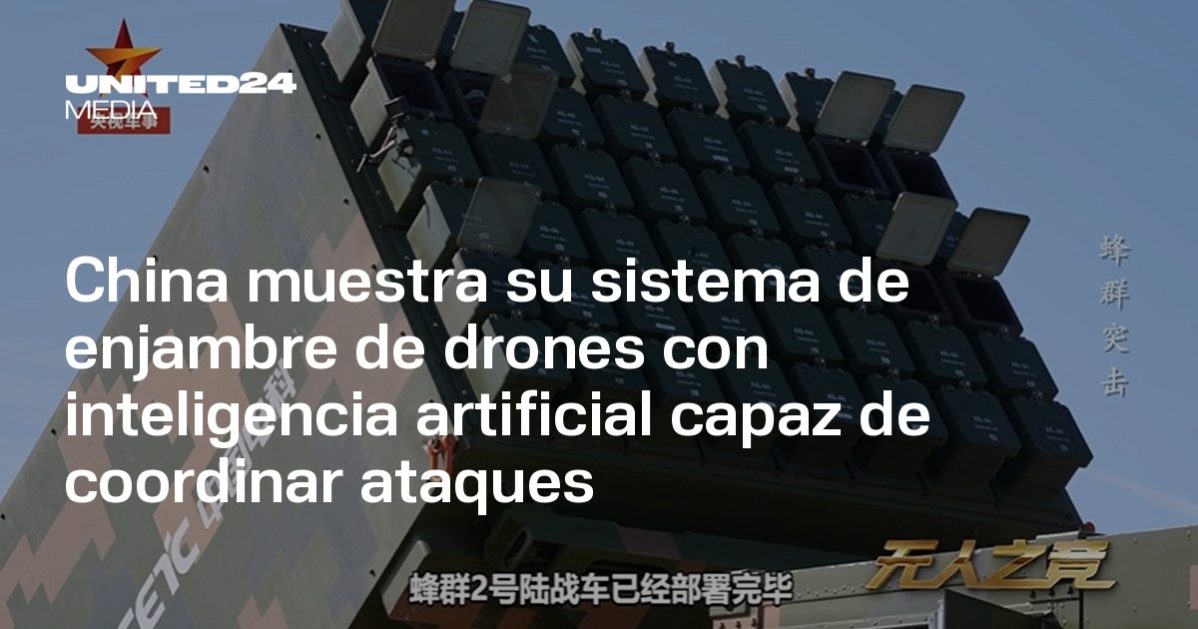
China unveils its revolutionary artificially intelligent drone swarm system capable of coordinating autonomous attacks, marking a milestone in the...
China's Atlas has surprised the world by deploying a swarm of drones during a demonstration of autonomous, artificial intelligence-powered capabilities. This technological breakthrough, unveiled on 25 March, represents a quantum leap in the automation of military operations, highlighting the crucial role of algorithms and intelligent systems on the battlefield.
The Atlas system consists of three key elements: the Swarm-2 ground combat vehicle, the command vehicle and a support vehicle. The Swarm-2, unveiled at Airshow China 2024, has the capability to carry and launch up to 48 fixed-wing drones. The command vehicle can coordinate up to 96 drones simultaneously, operating as a single entity in the air.
Swarm Intelligence and Algorithmic Advances
The real innovation of the system lies in the drones' ability to operate together. Thanks to advanced algorithms, these devices can communicate with each other, adjust their routes in real time and adapt to external conditions such as air currents. This network of drones makes local decisions that contribute to a common goal, combining precision, speed and autonomy.
Military Applications and the Future of AI on the Battlefield
The battlefield implications are significant. The Atlas system makes it possible to saturate air defences with multiple drones from multiple directions, making it difficult for the enemy to respond. It also offers a new level of precision by keeping drones on target, observing the target and adjusting the strike in real time. This ability to operate at long range and low altitude, with minimal radar detection, opens up new tactical possibilities.
These advances are made possible by artificial intelligence and large-scale modelling. The ability to recognise targets, plan complex routes and adapt to changing environments without constant human intervention represent significant advantages in complex scenarios. The autonomy of these systems becomes a strategic advantage in situations where speed of decision is critical.
International Cooperation and Technological Development
The development of these capabilities coincides with an increase in military cooperation between Russia and China. Leaked documents suggest plans for technology transfer and specialised training, evidence of a growing interest in advanced military technologies. Collaboration between the two powers reflects the importance of military innovation and knowledge-sharing to strengthen their defence capabilities.
In conclusion, the Atlas system represents a significant advance in the integration of artificial intelligence into military operations, leading the way to more automated and strategically advanced warfare.
Source: united24media.com
 Español
  English (UK)
